Asia is ageing at a speed for which there is no ready-made model. By 2050, one in four people in the region will be over 60. The question is not only where they will live or who will care for them. It is what kind of life our systems will allow them to continue living.
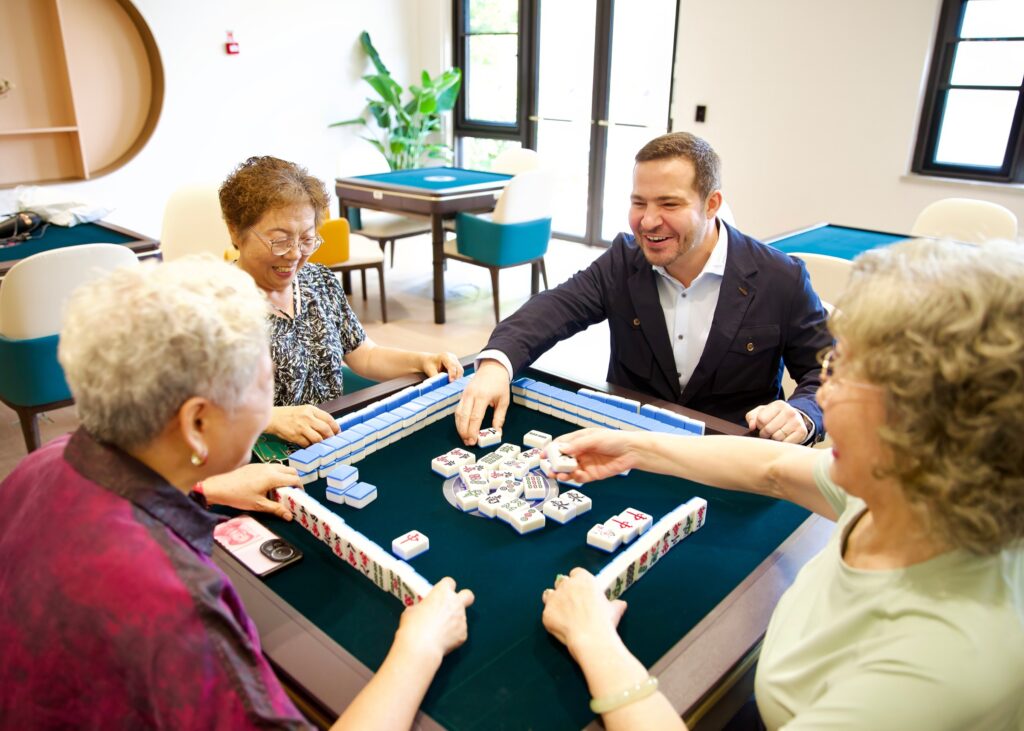
I do not see senior living as real estate with care added, or healthcare transferred into a more attractive building. At its best, it is a way of preserving agency, purpose and human connection as needs change. To work, it must make sense to residents and families, fit the culture around it, support caregivers and remain economically durable.
Since 2013, I have been building and operating eldercare platforms across Asia. The reflections below come from that experience: how demographics, culture and policy shape family decisions; how care and longevity models evolve; and how we can add life to years rather than simply years to life.
From the archive
-
Senior living
At Sindora Nanjing, style has no expiry date
(🎥sound on🎵)Your grandmother might just be cooler than you! 🕶️
🎂Still young. Always elegant. Sindora Nanjing turns 2️⃣!
Two years of care, community, dignity, laughter, and residents proving that style has no expiry date.
That’s senior living on your own terms.
Happy anniversary to our residents, their families, and our dedicated teams!
First published on LinkedIn, May 28, 2026. View the original post.
-
Senior living
Creating beautiful memories at Sindora Living
🎥 We’ve filled 2025 with fun, and we are ready to make 2026 unforgettable together. 🥂 Happy New Year from whole Sindora team!
First published on LinkedIn, January 5, 2026. View the original post.
-
Senior living
Who says therapists need white coats?
Yesterday, a couple of ponies wandered into our Nanjing community as if it was the most natural thing in the world. Residents reached out, touched them, chatted with them, laughed with them. A few grandchildren who were visiting joined in, and for a moment you had three generations reacting with the same simple joy.
The whole place felt different.
At Sindora Living 欣岳年, this isn't a gimmick: it’s the kind of experience we try to create every day: simple, sensory, a bit spontaneous, and very human.
🧬 There is actually science behind it: Cortisol drops, oxytocin rises, memories reappear. ✨ But what you really notice is the spark and the fun: A laugh you didn’t expect. A hand reaching out. A familiar expression on someone’s face. These small things say more than any activity plan ever could.
Senior living doesn’t have to be sealed off from the world. It can stay open, connected, alive. Bringing ponies indoors is just one way of showing that life still moves through the community.
What stayed with me wasn’t the event itself, but how naturally people responded to it. Warm fur, light laughter, a bit of colour in an ordinary morning.
That’s adding life to years.
First published on LinkedIn on December 11, 2025, with a follow-up video on December 12, 2025. View the original post · View the video post
-
Senior living
Why are we carving turkeys in the heart of Nanjing?
It isn't about importing a foreign tradition. It's about the purpose.
In this industry, we legitimately obsess over the Hardware (the comfortable living environment, amenities, and equipment) and the Software (the care models, healthy longevity programs, and fun service offerings).
But for Thanksgiving, we are thankful for the Heartware.
👉 The deliberate choice to turn a community into a family.
We are grateful to our staff and residents who prove daily that connection is the only dimension that truly matters, and the one that brings all others together.
Read the English transcript
I am very happy to celebrate Thanksgiving. I enjoyed so many delicious things today: lamb skewers, roast chicken and candied hawthorn. The Thanksgiving celebration in our community was full of variety. We are very happy.
English transcript translated and lightly edited from the original Chinese audio for names and readability. The video is the definitive record.
First published on LinkedIn, December 1, 2025. View the original post.
-
Senior living
No age limit for trick or treat
Only good spirits 👻 at Sindora Living 欣岳年 🧙
First published on LinkedIn, November 5, 2025. View the original post.
-
Senior living
Celebrating Singapore, Celebrating Longevity
As Singapore marks its 60th anniversary, our Singapore Cultural Week at Sindora Living 欣岳年 was a tribute to the city-state’s vibrant spirit and to the idea that, like Singapore, we can keep getting stronger with age.
From Prof. Brian Kennedy science-based insights on how to maintain strength, vitality and purpose… …to Mrs. Sun, 71 years young, moving with the energy of someone decades younger and inspiring over 1 million followers worldwide, the week was a living example of empowerment at any stage of life.
Blending Singaporean culture with longevity science, we celebrated the flavours, music and creativity that keep us young at heart.
Because ageing well, like building a nation, is about living fully every single day while planning for tomorrow.
Read the English transcript
Towards an even happier and longer-lived tomorrow.
English transcript translated and lightly edited from the original Chinese audio for readability. The video is the definitive record.
First published on LinkedIn, August 12, 2025. View the original post.
-
Senior living
One year of trust at Sindora Nanjing
So much has already come to life in just one year. And yet, this is only the beginning. 🥂🍾
Read the English transcript
This morning we held an anniversary gathering attended by many guests and community leaders. We marked the occasion with photographs and cake, and everyone had a wonderful time.
It is an honour to join Sindora Nanjing’s anniversary celebration. I learned that residents in a senior-living community can attend a university for older adults and take part in a wide range of activities. I also learned how newer technologies can support older people living with cognitive impairment. At Sindora, care goes beyond everyday assistance to include psychological wellbeing and rehabilitation.
I am very happy to celebrate Sindora Nanjing’s first anniversary with everyone. Over the past year, we have earned the trust of many residents and families. We have accompanied our residents as we grew from strangers into people who know one another and now live together like a family. In the future, we hope to bring the same warm, personalised service to more older people in Nanjing. Through Sindora’s professional and empowering approach, we want to help them begin a new chapter of life.
English transcript translated and lightly edited from the original Chinese audio for names and readability. The video is the definitive record.
First published on LinkedIn, June 5, 2025. View the original post.
-
Senior living
Happy Chinese New Year!
🧧Thank you to our dedicated team for ensuring every moment is special—during the festivities and always.🧧
First published on LinkedIn, January 29, 2025. View the original post.